|
A Frenchman of Russian extraction called
Alexandre Korganoff (1922-2004 - the late
author of The Phantom Of Scapa Flow Ian Allan Ltd., 1974 )contacts me by telephone,
and says that he's involved in trying to
raise capital to finance an expedition to
the Caribbean. He explains that he knows
the spot where the wreck of a Spanish plate
vessel named Nuestra Senora de la Conception lies on a coral reef. He asks me to fly
over to Paris to see him.
 After discussions with Colin and the two
McCormack brothers, I fly to Orly Airport
where korganoff is waiting for me. He's casually
dressed, with a rather dishevelled, shifty,
mad-professor look about him. He speaks good
English. We drive is his old beaten-up car
to the seedy Montmartre area of the city.
From the early 19th century until the migration
in the 1920s to Montparnasse,Montmartre was the major art colony of Paris.
Now, through the clouds of blue exhaust smoke,
as we career through the winding streets
in my host's battered Citroen, I see that
sections are highly commercialised for the
tourist trade; other areas however, are unselfconsciously
picturesque. Montmartre is known for its
nightclubs and entertainment. I look out
for the Moulin Rouge but don't see it. We
turn into a mean street with the remains
of fruit and vegetables lying on the pavements.
Obviously there has been a street-market
situated here at some time earlier in the
day. After discussions with Colin and the two
McCormack brothers, I fly to Orly Airport
where korganoff is waiting for me. He's casually
dressed, with a rather dishevelled, shifty,
mad-professor look about him. He speaks good
English. We drive is his old beaten-up car
to the seedy Montmartre area of the city.
From the early 19th century until the migration
in the 1920s to Montparnasse,Montmartre was the major art colony of Paris.
Now, through the clouds of blue exhaust smoke,
as we career through the winding streets
in my host's battered Citroen, I see that
sections are highly commercialised for the
tourist trade; other areas however, are unselfconsciously
picturesque. Montmartre is known for its
nightclubs and entertainment. I look out
for the Moulin Rouge but don't see it. We
turn into a mean street with the remains
of fruit and vegetables lying on the pavements.
Obviously there has been a street-market
situated here at some time earlier in the
day.
The car shudders to a halt outside a large,
sunblistered door in the Rue Caatellane.
We enter the foyer where a doddery concierge
is nodding over her knitting. She doesn't
glance up as Korganoff raps on the door of
a ground-level flat. His wife, a thin, edgy
looking woman, opens the door. She's quite
a fetching tall blonde woman. It later transpires
that she's the daughter of the Nazi Admiral
Raeder. I'm very surprised immediately we
step inside, for in the entrance hall is
large glass display case containing tailor's
dummies dressed in resplendent braided uniforms.
korganoff tells me that the uniforms are
those of the illustrious Russian Preobrazhensky
Guards regiment who formed the Czar's personal
bodyguard., and had belonged to his Father.
He goes on to say that his Father Segei was
the lawyer who had defended Prince Yousipoff
who murdered Rasputin.
We take our seats at the dining table, where
the Frenchman's two small sons are already
sitting. I am utterly amazed to be addressed
in good English by the eight year old Gregory,
who speaks German to his mother, Russian
to his Father, and French to the maid who
suddenly appears from the kitchen.
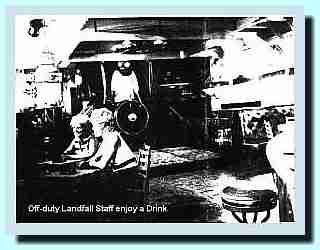
Over the meal, my host tells me that he is
a great rival of Jacque Costeau, and that
he was at Naval Training College with him
when the Germans marched into France. The
Germans had allowed Costeau to remain at
college, where he later went on to invent
the so-called aqualung. korganoff however,
was forced to leave the college because of
his Russian émigré background. He then tells
me the story of the Spanish galleon, the
Nuestra Senora de la Conception. She'd hit
a notorious coral reef called the Silver
Shoals about sixty nautical miles north West
of Puerto Rico in 1647. She'd been part of
the great Spanish treasure fleet which made
a annual trip back to Spain loaded with gold
plundered from the South American territories
annexed by the Spanish crown. The great English
sea captain John Smith, of Pocahontas fame,
had managed to retrieve much gold and silver
from the upper decks using native divers.
The diving had come to an abrupt end when
terrified divers claimed to have seen a golden
statue of the Madonna come to life. In spite
of death threats, the natives refused to
visit the wreck again. korganoff explains
that an American Air Force pilot friend of
his, an arctic explorer named Krause, [who
had a place named after him in that white
wilderness, known as Krause Point,] had done
a photosymetrical survey of the Silver Shoals
which had located the wreck site.
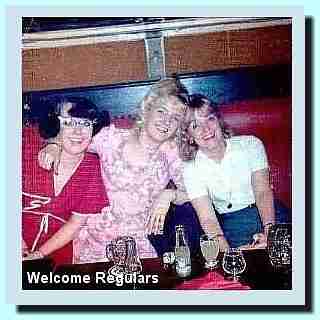 He went on to say that the Dominican playboy,
Porfiro Rubirosa, who was married to the
film star Ava Gardner at the time, had mounted
an expedition at his own expense. Seemingly,
Rubirosa had a fleet of eight fishing vessels
based at Marseilles. The boats were named
after the musical scale. Doh, Rae, Me, Fah,
Soh, Lah, Tee, Doh. According to Alexandre
Korganoff, the fishing boat Rae was chosen to sail over to Puerto Plata
in the Dominican Republic with her French
crew. They also used native divers, who with
their large lung-capacity are capable of
staying below for long periods. Again, the
Golden Madonna enters the tale. The natives claimed to have
seen her ghostly apparition and refused to
continue diving. The vessel returned to Puerto Plata, where the captain committed suicide by
hanging himself with the cord used to operate
the boat's siren. Unfortunately he did the
deed in the middle of the night and woke
up half the town! Rubirosa himself was killed
in a car crash in Paris soon afterwards.
My host says that he's arranged for a private
screening of a film, which he and Krause
had made on a previous visit to the wreck
site. The next day, korganoff takes me in
his car to a cinema in the Champs Elysées.
There, sitting alone in the vast empty cinema,
we view a film shot with underwater cameras,
which purports to show shots of the Nuestra
Señora de la Conception. There IS nothing
on camera, which actually identifies the
wreck as the boat, in question. I promise
korganoff that I will try to interest my
British colleagues in the venture and fly
back home. He went on to say that the Dominican playboy,
Porfiro Rubirosa, who was married to the
film star Ava Gardner at the time, had mounted
an expedition at his own expense. Seemingly,
Rubirosa had a fleet of eight fishing vessels
based at Marseilles. The boats were named
after the musical scale. Doh, Rae, Me, Fah,
Soh, Lah, Tee, Doh. According to Alexandre
Korganoff, the fishing boat Rae was chosen to sail over to Puerto Plata
in the Dominican Republic with her French
crew. They also used native divers, who with
their large lung-capacity are capable of
staying below for long periods. Again, the
Golden Madonna enters the tale. The natives claimed to have
seen her ghostly apparition and refused to
continue diving. The vessel returned to Puerto Plata, where the captain committed suicide by
hanging himself with the cord used to operate
the boat's siren. Unfortunately he did the
deed in the middle of the night and woke
up half the town! Rubirosa himself was killed
in a car crash in Paris soon afterwards.
My host says that he's arranged for a private
screening of a film, which he and Krause
had made on a previous visit to the wreck
site. The next day, korganoff takes me in
his car to a cinema in the Champs Elysées.
There, sitting alone in the vast empty cinema,
we view a film shot with underwater cameras,
which purports to show shots of the Nuestra
Señora de la Conception. There IS nothing
on camera, which actually identifies the
wreck as the boat, in question. I promise
korganoff that I will try to interest my
British colleagues in the venture and fly
back home.
TREASURE HUNTERS CLUB OF GREAT
BRITAIN.
By this time, we've formed a club called
the Treasure Hunters Club of Great Britain. I'm elected chairman and a chemist friend
of ours called Ben Gould, who was also a
diving instructor, is chosen as the treasurer.
Our idea is that we will ask members of the
public to subscribe £10 each for a share,
and this money will be used to finance the
expedition. To this end, I place an advert
in The Liverpool Echo announcing a public meeting on board my
floating night-club, Landfall. In the advert,
I mention that the sunken gold deposits are
said by korganoff to be worth ten million
pounds, and that each subscriber of £10 will
receive a share of the prize should we be
successful in raising the treasure.
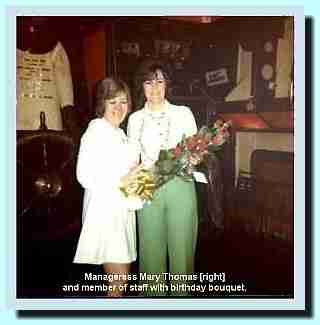
The meeting takes place on board the Clubship Landfall at 8pm on Tuesday 2 December 1969. Korganoff
promises to fly to Liverpool for the meeting,
but he does not show up. I chair the meeting,
which goes very well. We manage to form a
committee and we even take about 25 deposits
from interested people. I may mention that
there are two men in the audience who are
obviously police from the fraud squad, giving
us the once over and checking out that it's
not all a big scam.
I telephone Korganoff and bellyache bitterly
about his non-arrival at our meeting. He
makes some lame excuses, but I manage to
make another date for him to come and speak
to our Treasure Hunters Club committee.
A week later I meet Korganoff at Manchester
airport. With him is a shady looking Maltese
man whose name I forget. He hands me his
card on which is written his company 'Underwater Developments Ltd', Valetta, Malta. I don't know why, but I'm
suspicious of this man, and when we get back
to the Landfall, I make an excuse and go
to the office. I telephone The Registrar of Companies at Companies House in London, and ask them if they'd
such a company registered in that name.
At that time, Maltese companies are recorded
in London, because of Malta being a member
of the British Commonwealth. They come back
to the telephone with the answer. 'No,' says
the voice, 'Underwater Developments isn't a bone fide company'. We have the
meeting that evening in the Nelson Room.
Korganoff repeats the story of La Nuestra Senora de la Conception. He outlines the nature of the expedition
and what kind of salvage vessel and equipment
will be required. Powerful pumps are required
to 'hoover' the fragments of broken coral
- he needs explosives etc. He is to be the
expedition leader, and the money is to be
deposited in a Bahamian bank, with him as
the sole authorised signatory for withdrawals.
I smell a rat, and call a break in the proceedings.
I then confer with my colleagues and tell
them about the non-existence of the Maltese
company. I decide that we are being drawn
into a very murky set-up, and when we return
to the meeting, I stand up and said so. I
then resign as Chairman. The meeting breaks
up in disorder. That is the end of the La Nuestra Senora de la Conception as far as we are concerned. I see to it
that the £10 deposits are returned to the
people whom had paid.
Further Reading
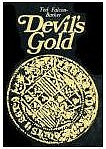
Devils Gold by Ted Falcon-Barker, Nautical
Publishing Company, 1969.
La Nuestra Senora de la Concepcion struck the Los Abrojos reef, 60 miles north
of Haiti after being severely damaged in
a hurricane in 1659. Her cargo: one hundred
tons of silver and gold coin and bullion.
A survivor of wreck passed the location of
the Concepcion's resting place to an Englishman
named William Phips.
Phips, sponsored by King Charles II, set
off to locate the wreck of the Concepcion
in 1683. Arriving at Los Abrojos reef he
realised that he wasn't the only person searching
for treasure, other ships were already there.
Realising that his small ship and crew would
be unable to fight off the other ships that
had gathered in search of the treasure, Phips
returned to England to try and secure a heavily
armed war ship to escort him back to the
Los Abrojos reef. He found several wealthy
backers including the Duke of Albemarle who
provided him with a total of three ships,
two of which were heavily armed.
The three ships reached Haiti in 1686. One
of the ships, the Henry, was sent to the
search area immediately, the others stayed
behind at Porto Plata. On the first day of
the renewed search at the Los Abrojos reef,
a member of the diving team paddling a canoe
over the site spotted a strange looking sea
plant amongst the coral below him, diving
down to retrieve it, he saw several bronze
canon. Search operations ended and salvage
began.
In the days that followed the divers recovered
thousands of silver coins and a number of
silver bars.
The Henry returned to Porto Plata with the
treasure and Phips ordered all three ships
to the site to begin full scale salvage of
the Concepcion's precious cargo.
When Phips eventually returned to England,
he carrying treasure worth £300,000. That's
£300,000 in the money of 1687, it would be
countless millions today. The bulk of the
Concepcion's treasure was still on the sea
bed, Phips had only managed to recover one
third of the Concepcion's registered cargo.
Phip's primitive tools were not up to the
challenge of cutting through the growth of
coral that had covered the wreck site. Try
as he might, he couldn't break into the Concepcion's
Plate Room - where the vast majority of the
silver was stored.
Ted Falcon-Barker
In 1967, Ted Falcon-Barker, an Australian
treasure hunter and two companions arrived
at the site to try their luck at locating
the wreck and breaking into the Plate Room
with modern explosives. They found 96 gold
gold coins (all the coins were from the reign
of Ferdinand & Elizabeth 1497-1516),
a solid gold crucifix and a life sized solid
gold finger, possibly from a statue the Concepcion
was believed to be carrying.
The treasure hunt ultimately ended in disaster.
Whilst on route to Port Royal for repairs
to their boat and to pick up supplies, the
crew dropped anchor over night in a small
bay on the coast of Haiti where they were
boarded by thieves. One of the crew, Hugh
MacDonald, received a stab wound that would
later prove fatal.
Falcon-Barker shot one of the boarders with
a harpoon gun before firing on the rest of
the would be pirates with the shotgun he
had onboard, but it was too late for poor
Hugh, the damage was already done, the knife
had punctured his lung and so far from proper
medical care he didn't stand a chance.
Falcon-Barker wrote a book about his attempts
at salvaging the treasure of the Concepcion
(Devils Gold, Nautical Publishing Company,
1969) which is well worth getting, if you
can find it.
|